
Landmark civil rights case · U.S. Supreme Court
Barnes v. Felix
605 U.S. 73 (2025) · No. 23-1239
In a unanimous decision, the Supreme Court of the United States rejected the “moment of threat” rule that had limited how courts judge police use of deadly force. Attorney Adam Fomby served as lead counsel for Janice Hughes Barnes, the mother of Ashtian Barnes, from the trial court through the Supreme Court.
Talk to an attorney
- Argued January 22, 2025
- Decided May 15, 2025
- Vote 9–0
- Opinion Justice Elena Kagan
The case
A traffic stop over unpaid tolls.
On April 28, 2016, Harris County Deputy Constable Roberto Felix Jr. pulled over 24-year-old Ashtian Barnes on the Sam Houston Tollway in Houston because the rental car he was driving had outstanding toll violations. About two minutes into the stop, as the car began to move forward, Officer Felix jumped onto the door sill and fired two shots into the car. Ashtian Barnes died at the scene.
His mother sued under 42 U.S.C. § 1983, alleging that the officer used excessive force in violation of the Fourth Amendment. The federal district court and the Fifth Circuit both ruled for the officer by applying the Fifth Circuit’s “moment of threat” doctrine, which looked only at the final two seconds before the shots were fired and set aside everything that led up to them.
The family
Nine years of fighting for Ashtian.
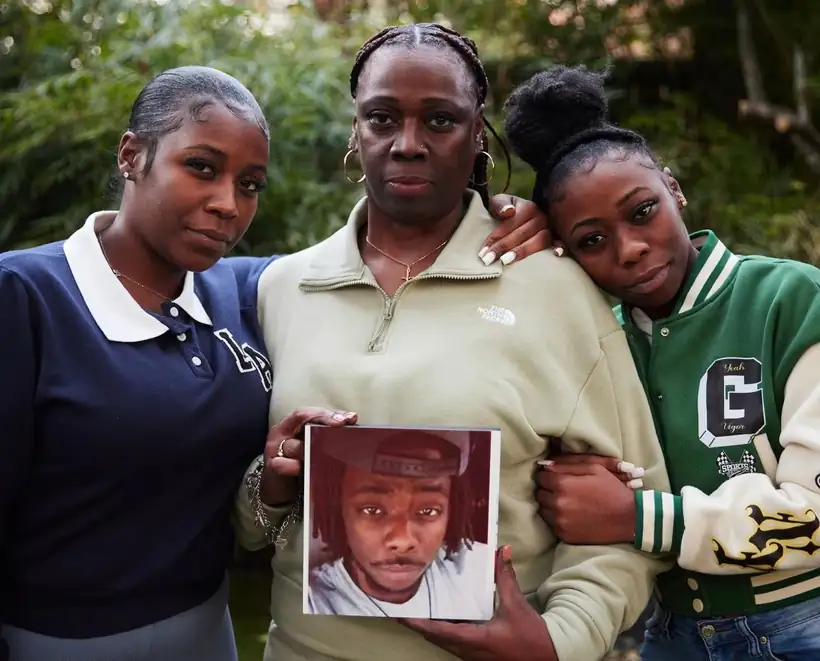
Ashtian Barnes was 24 years old. His mother, Janice Hughes Barnes, refused to accept that a two-second window could decide whether his death was justified, and she carried his case from a Houston federal courtroom all the way to the Supreme Court of the United States.
The family’s story was featured by NBC News before the case was argued in January 2025.
Read the NBC News storyThe decision
No more “chronological blinders.”
The Supreme Court vacated the Fifth Circuit’s judgment. Writing for all nine Justices, Justice Kagan held that whether an officer’s use of force was reasonable must be judged by the totality of the circumstances, including the events leading up to the moment force was used, not by a narrow window around the final seconds.
“The question presented to us was one of timing alone: whether to look only at the encounter’s final two seconds, or also to consider earlier events serving to put those seconds in context.”— Justice Elena Kagan, for the Court
- The rule now applies in every federal court in the country, including the Fifth Circuit, which covers Texas.
- Courts reviewing an excessive-force claim may consider what the officer did before the “moment of threat,” not just the instant the trigger was pulled.
- The United States, through the Solicitor General, filed a brief supporting vacatur of the Fifth Circuit’s judgment.
Our role
From the trial court to the Supreme Court.
Adam Fomby served as lead counsel for the Barnes family from the U.S. District Court for the Southern District of Texas, through the Fifth Circuit, to the Supreme Court, with final say over the briefing and strategy at every stage. He argued the case in both the district court and the Fifth Circuit, and worked on the case with Howard Fomby of the Fomby Law Firm.
At the Supreme Court, he partnered with Neal Katyal, former Acting Solicitor General of the United States, and the appellate teams at Hogan Lovells LLP and Milbank LLP. Nathaniel A. G. Zelinsky presented the oral argument. The Court’s unanimous ruling now governs excessive-force cases in every federal court in the country.
Gallery
At the Supreme Court.
Photos: Ana Isabel Photography


Hurt by someone who was supposed to protect you?
Talk with an attorney who has taken a civil rights case from a Houston traffic stop to the U.S. Supreme Court. Consultations are free.
Source: Barnes v. Felix, 605 U.S. 73 (2025), Supreme Court No. 23-1239.
This page describes a past case for informational purposes. Every case is different, and past results do not guarantee a similar outcome in any future matter.